
How biopharma should navigate sustainability pushback
Biopharma is a sector built on science — and the science is clear: climate risks are intensifying. So why are so many companies pulling back from their sustainability commitments?
Cytiva recently published its 2025 Global Biopharma Resilience Index , and it offers some clues. For the first time, the Index evaluated the state of sustainability alongside innovation, digitalization, talent, regulation, and policy — and the findings reveal that sustainability is under strain:
43% of biopharma executives say their company is failing to meet sustainability targets.
63% admit that short-term financial pressures and competing priorities are pushing sustainability off the agenda.
Fewer than half believe there is enough collaboration or policy support to drive meaningful change.
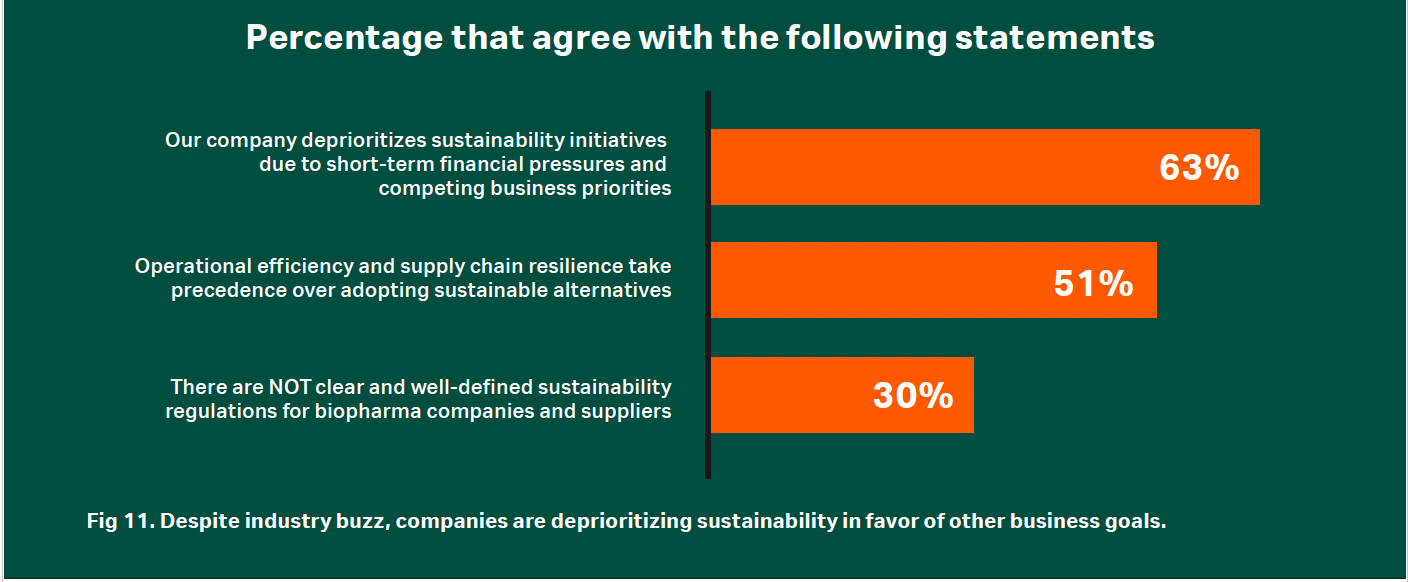
It seems that industry knows what needs to be done, but immediate pressures are steering attention elsewhere. The sector is being tugged in diverging directions. Economic pressure is rising, supply chains are tight, and policy signals are mixed — Europe is betting on decarbonization for competitiveness, while the U.S. is hitting the stop button on fossil-free business models.
But the science isn’t going away. If anything, the gap between what we know about the sector’s impacts and what we do about it is widening. Is biopharma, a sector defined by innovation, at risk of sleepwalking into greater climate risks?
Turn uncertainty into strategy
We see this trend across industries, so biopharma is far from unique. But the industry has an opportunity to set itself apart. It has always thrived on complexity. For a science-driven sector built on precision, collaboration, and long-term investment, sustainability shouldn’t be considered a distraction — it’s a strategic advantage. Bringing sophisticated products to market calls for close coordination across suppliers, partners, and customers. That interdependence is also biotech’s greatest opportunity for leadership in reducing emissions: the value chain itself.
When companies frame the sustainability business case through a value-chain collaboration lens, they can stay the course on decarbonization — and turn risk into opportunity. Here’s what that can look like:
Stay the course even when things get tough. The entire value chain has a mandate — and a responsibility — to reduce unnecessary CO₂ emissions. As a cornerstone of this value chain, biopharma already shows leadership and sets the pace. To up the game, it needs to involve its customers more in co-creation.
Engage consistently. Articulate the business case clearly, involve suppliers early, and create consistency in expectations. Collaboration beats compliance every time.
A call for system-level resilience
Because if each company retreats into short-term survival mode, the momentum we’ve built across the healthcare value chain risks stalling — just when innovation and collaboration are starting to bloom.
Sustainability may be under pressure, but this is biopharma’s moment to prove what it does best: Respond to complexity with courage, collaboration, and science.
#cytiva
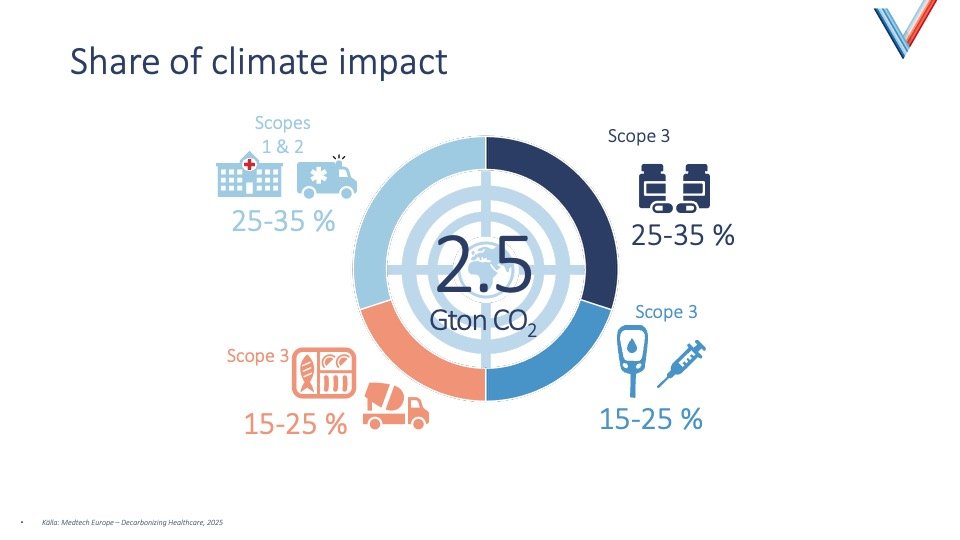
Responsible for more than a quarter of healthcare’s emissions, pharma carries a heavy share of the climate challenge — and with an aging population, that footprint is only set to grow.